
Swim Meet 101


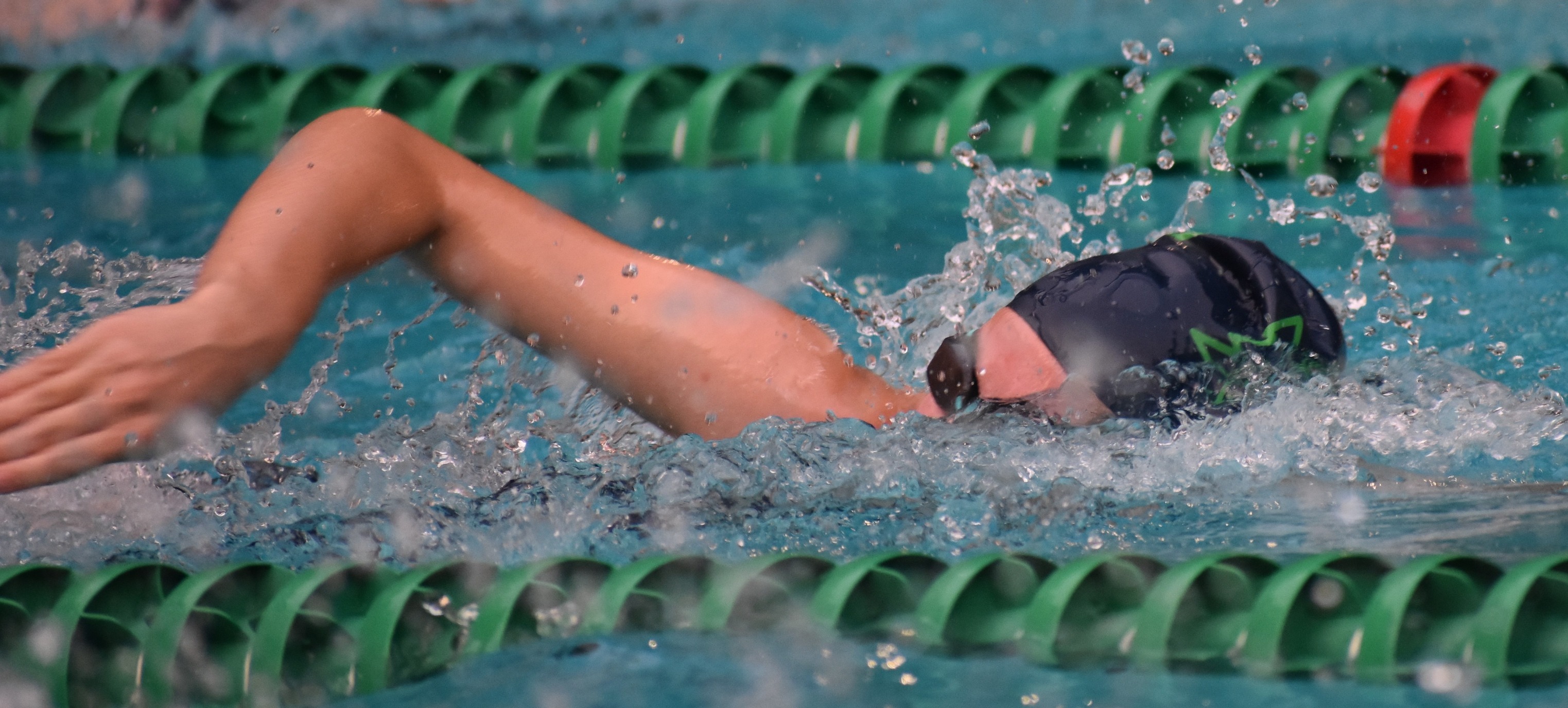
Swimmer Preparation & Instruction
1. Arrive on time! Be there at least 15 minutes before warm-ups start, and allow time for parking (it can get crowded).
2. Congregate in the Ridgetop designated area.
3. Know your event numbers. You may want to write your event numbers on your hand/arm (use a Sharpie). This is especially helpful for young or new swimmers.
4. Event numbers are posted before each meet. At home meets they will be on the whiteboard. Hint: Most of the RT coaches will have a meet sheet and can usually help.
5. Warm-up following the coaches’ instructions.
6. Note the location of Clerk of Course at away meets.
7. Stay in the Ridgetop team area and be ready for your events.
8. Listen to the announcer. He/she will keep everyone informed of the current event and heat number and will announce when swimmers in upcoming events should report to the Clerk of Course.
9. When the announcer calls your event number, go directly to the Clerk of Course. It’s the swimmer’s responsibility to get to the Clerk on time! 8 & Under parents should assist their swimmers to get to the Clerk of Course on time.
10. Swim team scores and individual swimming times are posted on a designated wall as the meet progresses. They are first tabulated and verified by the table workers, which takes a while. If you leave a meet before all results are posted, they will be available during practice the next day or on the website. Ribbons are given out with donuts the next day!
11. Before leaving the meet be sure you are NOT needed for a relay. Relays are posted on the fence.
12. Please leave the pool area free of litter at Home and Away meets. Also be responsible for your own belongings (e.g., goggles, towels).
13. Appropriate behavior is always expected. At home meets, please be helpful and make the visiting team feel welcome. At away meets, be polite to guests.
Classification of Swimmers for Meets
Classification by Age
The James River Aquatic Club (JRAC) classifies swimmers according to their age groups and ability. Age for competition is determined by the swimmer’s age on June 1, so even if a swimmer “ages out” of an age group after June 1, in competition s/he remains in that group for the remainder of the summer season.
- 8&U
- 9&10
- 11&12
- 13&14
- 15 thru 18
Competitive Classification for Swimmers
Within their age groups, swimmers compete under the following classifications. Qualifying times for each age group and classification are available on the JRAC website:
- Novice: A swimmer is Novice in an event until s/he equals or surpasses the Regular qualifying time for that event in a competitive meet. In dual meets, there are unlimited heats of Novice in all events except 100 IM. A swimmer with a Novice time may be moved up by a coach to compete in the Regular heat. At dual meets, there is only one heat of Regular (three swimmers from each team).
- Regular: A swimmer is Regular in an event until s/he equals or surpasses the X qualifying time for that event in a JRAC meet.
- X: A swimmer is X in an event until he/she equals or surpasses the XX qualifying time for that event in a JRAC meet.
- XX: This is the highest classification in the JRAC system.
Once a swimmer attains a Regular, X or XX time in an event, s/he must continue to compete in that category until s/he attains a time that meets or surpasses the next classification level. Classifications are valid for two seasons within an age group. Swimmers compete against other swimmers within the same gender, age group, and competitive classification. These classifications are designed to group swimmers as fairly as possible and to motivate them to push to their capacity.
Common Sources of Disqualifications
By the end of a meet, the coach will be given the DQ cards that lists the reasons that each swimmer was disqualified. Below are some of the most common reasons. As mentioned, this should be part of the learning experience for younger swimmers as they master the competitive strokes. Work with the coaches in practice to correct the source of a disqualification.
One general comment that applies to all the events: although obviously pulling on the lane line is a source of disqualification, simply stopping and using the lane line to breathe (eg if a swimmer swallowed some water) need not necessarily lead to disqualification. It depends on whether the judge feels the swimmer used the lane line to advance his/her position, or if the swimmer ‘broke stroke’ sufficiently when stopping or re-starting the swim.
Also realize that, while Stroke & Turn Judges are trained to be consistent, they are only human and can sometimes miss a source of disqualification. Do not construe a failure to be disqualified in a single meet as an indication that a stroke has been mastered, at least not until the event can be swum consistently without disqualification.
The order of difficulty of the strokes—in terms of performing them legally—is freestyle →backstroke →butterfly →breaststroke. Note: While butterfly is the more tiring stroke for many, breaststroke leads to more disqualifications.
Common Freestyle Disqualifications
- Pulling on the lane line to advance position.
- Not touching the wall on a turn.
- Walking/pushing off the bottom of the pool.
Common Backstroke Disqualifications
- Pulling on the lane line to advance position.
- Does not stay on back while swimming.
- Turning over too early during a flip turn (taking two or more freestyle strokes, kicking/pausing too long before turning). Judges refer to this as swimming/kicking ‘on the breast.’
- Missed touching the wall with some part of the body.
- Pushing off a turn ‘on the breast’ (instead of on the back).
- Turning over (’on the breast’) before finishing the race.
Common Butterfly Disqualifications
- Non-simultaneous leg/feet movement: flutter kick, breast stroke kick.
- Feet cannot alternate in relation to one another.
- Non-simultaneous arm movement: freestyle, doggy paddle, breaststroke pull.
- Arms are not coming out of the water (need to see elbows).
- Arm movement is not simultaneous: rotating shoulders, freestyle stroke.
- Underwater recovery: taking additional strokes under the water.
- One hand or non-simultaneous touch on finish or turns.
Common Breaststroke Disqualifications
- Initial flutter or scissor kick on the start.
- Non-simultaneous arm movement (doggy paddle).
- Non-simultaneous leg movement (flutter kick).
- During the kick: both feet NOT turning outward during propulsive part of the kick movement. (Dolphin instead of frog kick.)
- Pulling past the hipline. Exception: this is allowed during the first stroke after the start and each turn.
- One hand or non-simultaneous touch on finish or turns.
Common Individual Medley Disqualifications
- Swims the stroke cycle out of sequence.
- Backstroke to breaststroke turn: turning over (’on the breast’) before the touch. A flip-turn from back-to-breast is a DQ.
- Rules for individual strokes apply in swimming the individual medley.